You’re on the list. We’ll email you once, when The Poor Pieces is out.
Novel · Fiction · Releasing December 2026
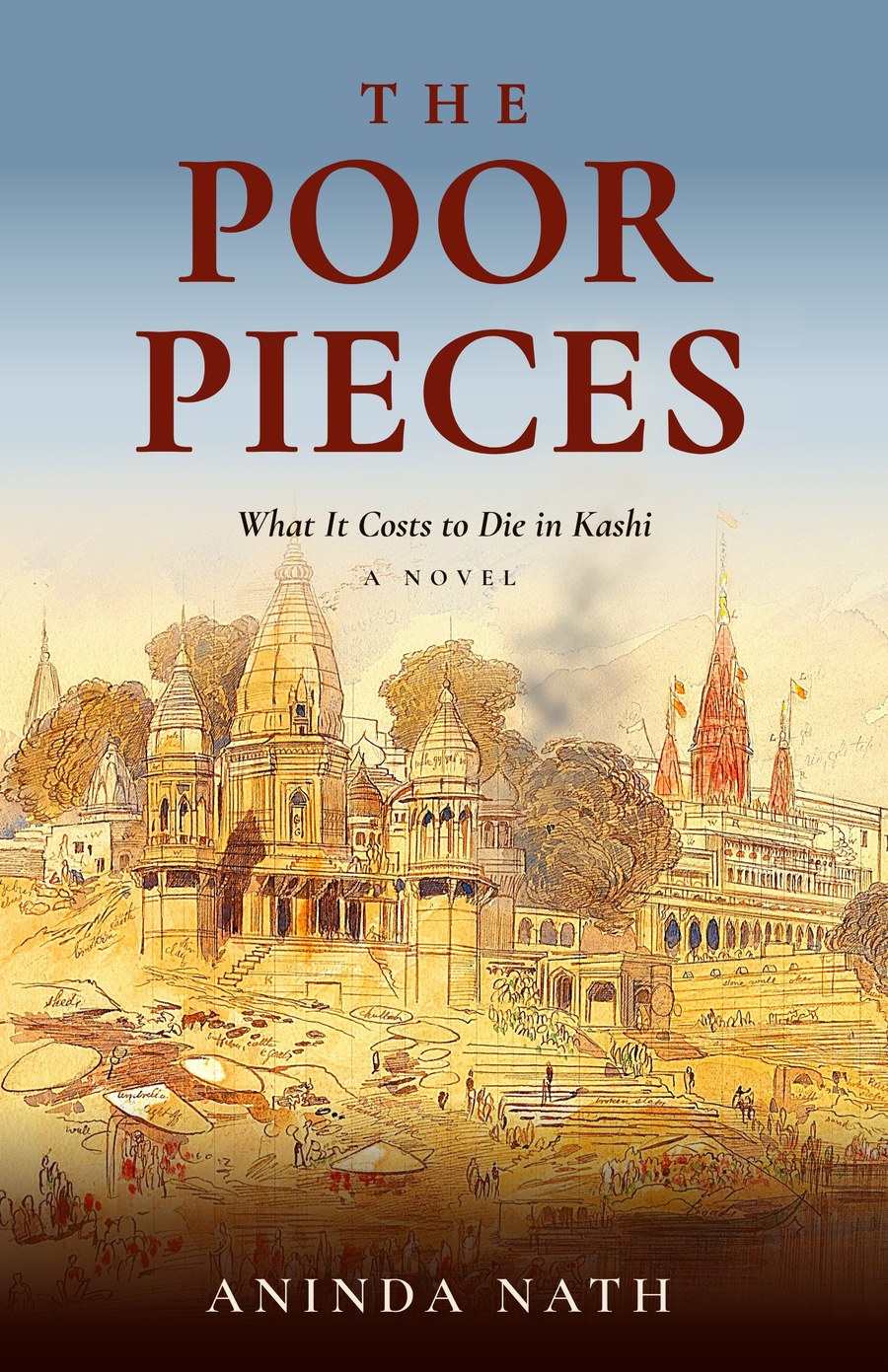
The Poor Pieces
What It Costs to Die in Kashi
a novel by Aninda Nath
The good wood faces the mourners.
The poor pieces go where nobody stands.
Kashi, 1827. A son learns every trick of the burning ground. Then he has to decide what his own father’s fire is worth.
About the book
You want to know what it costs to die in Kashi.
I can tell you to the last anna.
I have been counting it for nearly two hundred years, in life after life.
In 1827 I walked nine days beside a cart with my father in it. He had come to Kashi to die and never be born again. He was sure it would take a week. We took a room behind the burning ground, nine feet by seven, four annas a week.
He kept talking. The money did not keep.
He asked three times to be taken down to the river. I said no.
I carried wood. I learned to lay a stack so it looks sound from where the mourners stand, with the poor pieces on the river side, where nobody stands. I was very good at it. I would stay thirty-one years.
In the eleventh week it was my father’s fire, and I was four annas short.
I stood where the son stands and watched it burn for three hours.
I do not know what I felt about my father
in those three hours. I was assessing a burn.
The history behind it
Writing about Kashi for this site, Aninda kept running into the same promise: die in that city and you are set free. What he almost never found were the people who kept that promise running. Then he opened the great survey of the city, made in the 1820s, and found the trades of Benares written down, each with its headman’s name beside it. The men who carried the wood were not there. This novel began with that absence.
It is built to the same standard as the website. The survey that left the wood carriers out, the fee for a fire that only one kind of family could sell, the night in 1857 the narrator watches from a roof: all of it is in the record. The novel takes no side on matters of faith. What it cares about is what the promise of release costs the people who cannot afford it.
It is a work of fiction. For the history of the city it is set in, read the site’s treatise.
Hear when it’s out
One email when The Poor Pieces is published, with links to buy it. Nothing else; this list is separate from the site’s newsletter.